
A cordless drill battery that sits all winter in an unheated shed may still look fine in spring, yet have less runtime or refuse to charge. Knowing how to store tool batteries comes down to controlling heat, moisture, charge level, and physical damage.
Keep packs in a dry, protected location within the manufacturer’s recommended conditions, away from conductive metal objects and unnecessary heat sources.
Follow the battery and charger manual first, since storage instructions vary by battery chemistry, design, and manufacturer.
Start With the Battery Type
Battery storage advice should always follow the specific instructions provided for the battery platform. General Li-ion guidance is useful for many cordless tools, but voltage, electronics, charging systems, and approved storage conditions can differ between manufacturers.
Most current cordless power tools use lithium-ion (Li-ion) battery packs. They are relatively light, hold a charge well between uses, and need protection from extreme heat and deep discharge. Older tools may use nickel-cadmium (NiCd) or nickel-metal hydride (NiMH) packs, which have different charging and storage behavior.
The label on the battery usually identifies its chemistry. If it does not, check the tool documentation or the manufacturer’s support information before setting a long-term storage routine. Do not assume that batteries with similar voltage ratings, shapes, or terminal layouts are interchangeable. Use only the battery and charger system approved for that tool.
For most homeowners, the practical rule is simple: treat every cordless tool battery as an electronic device, not as a loose workshop item. It needs a clean, dry, protected place to sit between jobs.
The Right Charge Level for Storage
For a lithium-ion pack, avoid storing it completely empty for a long period. A battery left deeply discharged can fall below the level at which its protection circuitry will allow normal charging. It may then require manufacturer service or replacement.
For storage lasting more than a few weeks, many manufacturers recommend leaving Li-ion batteries partially charged rather than fully charged or empty. a partial charge in the middle portion of the battery indicator range is often a sensible general target, but the manual for your specific system takes priority. Some battery platforms give specific storage-charge instructions or automatic maintenance guidance.
If you use your tools weekly, there is no need to manage a special storage charge every time. Recharge a pack after use when needed, let it cool first if it is warm, and return it to its storage location. The partial-charge guidance matters most for seasonal tools, spare batteries, and workshop packs that may sit unused for months.
NiCd and NiMH packs may have different recommendations. They also tend to lose charge faster while stored. Check them periodically and follow the manufacturer’s directions instead of applying Li-ion habits automatically.
Choose a Cool, Dry Indoor Location
Heat is one of the biggest avoidable causes of battery wear. Do not leave tool batteries on a dashboard, near a radiator, beside a wood stove, or on a shelf that gets direct afternoon sun. A hot garage, attic, or vehicle can reach temperatures far beyond what a battery pack is designed to tolerate.
A closet, conditioned basement, utility-room cabinet, or interior workshop drawer is usually a better choice, provided the area stays dry. Moderate indoor temperatures are generally preferable to extreme cold or high-heat conditions. The exact permitted storage range is manufacturer-specific, so use the range in the manual if one is listed.
Cold storage has a different problem. A cold battery may temporarily deliver less power, and charging a battery that is too cold can damage it. If packs have been in a cold garage or shed, bring them indoors and allow them to reach room temperature before charging or using them. Do not try to warm a battery with a heater, heat gun, microwave, or direct sunlight.
Moisture matters, too. Keep batteries away from damp concrete floors, leaky windows, condensation, and areas where lawn chemicals, pool chemicals, gasoline, or solvents are stored. A battery case protects the cells, but it cannot reliably protect contaminated or corroded terminals.
Store Batteries Separately From Chargers
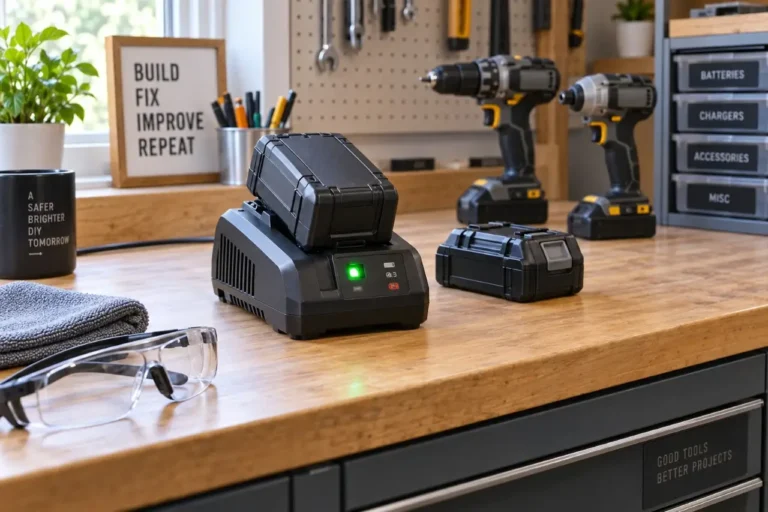
After charging is complete, remove the battery from the charger unless the manufacturer specifically states that the charger is designed for a different storage or maintenance mode. Leaving a pack connected for days or months can expose it to unnecessary heat, dust, and accidental damage, even when the charger has an automatic shutoff feature.
Let a battery cool after heavy cutting, drilling, or sanding before charging it. Likewise, let it cool after charging before placing it in a closed storage bin. A pack that is warm from normal use is not automatically unsafe, but enclosing warm electronics in a tight container is not a good habit.
Keep chargers in the same general area if that helps your workflow, but give each one a stable, ventilated surface and keep its cord protected from cuts, crushing, and tripping hazards. A charger is not a storage tray for spare batteries.
Set Up a Safe Storage Space
| Preview | Product | Price | |
|---|---|---|---|

| WELIDAY Tool Battery Carrying Case Storage Bag for Dewalt Battery |
$29.99
$25.35 | View on Amazon |
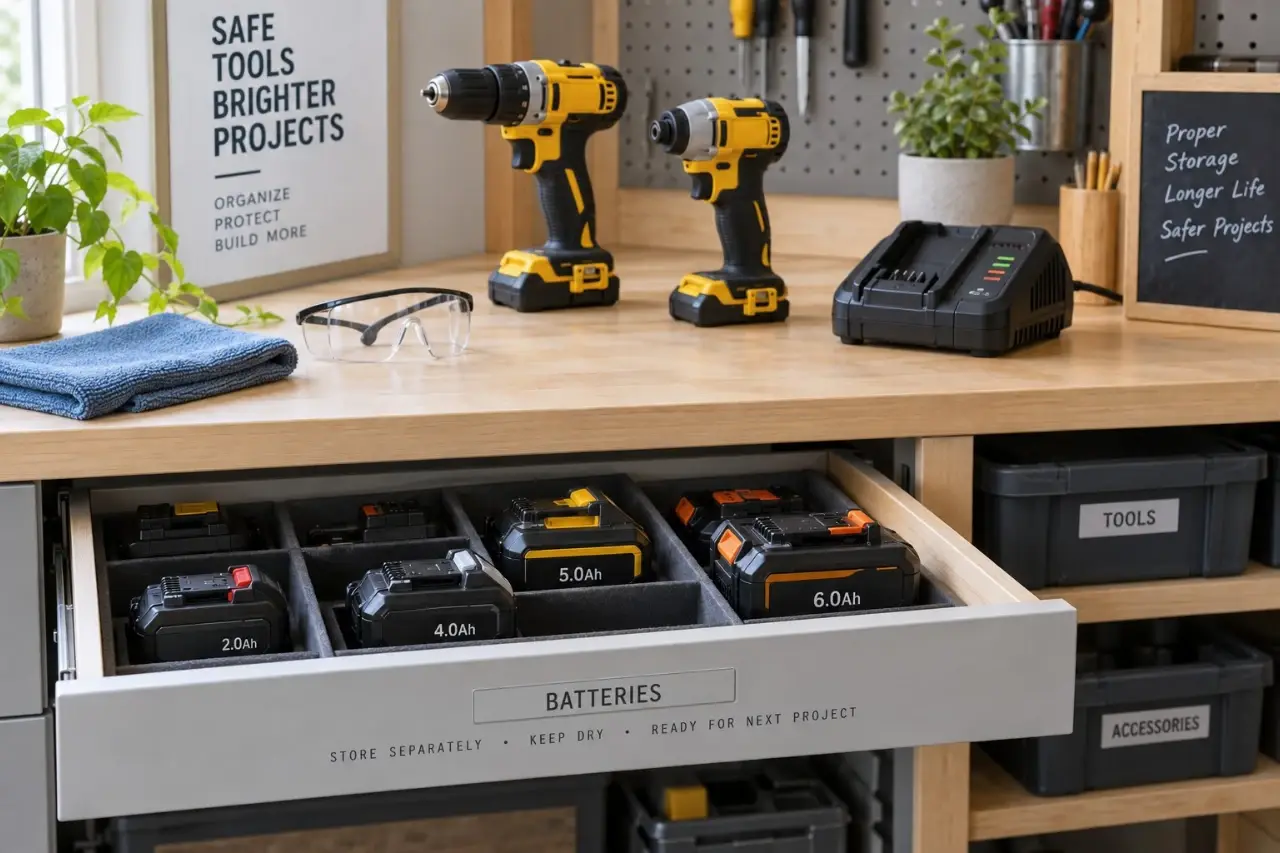
A labeled shelf, shallow drawer, or dedicated plastic organizer works well when it prevents packs from getting buried under hardware. The goal is to protect the housings and terminals while making routine inspection easy.
Avoid a loose pile of batteries in a metal toolbox or junk drawer. Metal screws, drill bits, wrenches, and other conductive items can contact exposed terminals on some battery designs. Even if the terminals are recessed, a crowded drawer increases the chance of broken latches, cracked housings, and contaminated contacts.
A practical battery station should provide these conditions:
- A stable, dry indoor shelf or cabinet away from heat sources and direct sunlight.
- Separation from nails, screws, loose blades, metal tools, and other conductive clutter.
- Clearance from gasoline, aerosol cans, paint thinner, sawdust buildup, and other flammable materials.
- Enough space to see each pack’s condition without stacking or forcing batteries into place.
For a small collection, individual compartments in a nonmetal organizer are convenient. For several tool platforms, label each area by battery system and voltage. This reduces the temptation to force a battery into the wrong charger or tool.
Check Long-Stored Batteries Before Use
A quick inspection every couple of months is worthwhile for batteries that are stored seasonally or kept as spares. Look at the housing, latch, vents, and terminals under good light. Wipe away ordinary dust with a clean, dry cloth. If terminals need cleaning, follow the manufacturer’s instructions and keep moisture out of the battery.
Use this decision table as a general inspection guide before returning a stored pack to service:
| What you notice | What to do |
|---|---|
| Clean case, secure latch, dry terminals | Charge and use it with the correct tool and charger. |
| Low charge indicator after several months | Recharge according to the manual, then monitor normal operation. |
| Cracked case, loose parts, badly corroded terminals, or a broken latch | Stop using it. Contact the manufacturer or an authorized service center for guidance. |
| Swelling, leaking, unusual odor, heat while idle, hissing, or smoke | Do not charge or use it. Keep people away, avoid handling it if doing so is unsafe, and contact emergency services if there is smoke, fire, or immediate danger. |
Do not try to open a battery pack, straighten damaged terminals, bypass a charger warning, or repair a damaged housing with tape. Power-tool battery packs contain cells and protective electronics that are not user-serviceable.
Common Storage Mistakes
The most common mistake is treating a battery like a permanent part of the tool. Remove the pack before putting a drill, saw, or sander away for an extended period. This helps prevent accidental activation and makes it easier to inspect both the tool and battery.
Another mistake is storing a battery in a shed because that is where the tool lives. This can be acceptable only when the shed stays within the battery manufacturer’s storage limits and remains dry year-round. In many parts of the United States, summer heat, winter cold, humidity, and condensation make an indoor location the more dependable option.
Finally, do not save damaged packs “just in case.” A battery that has been dropped hard, crushed, soaked, overheated, or visibly swollen should be taken out of service. Ask the manufacturer or a local household hazardous-waste or battery-recycling program about accepted disposal procedures. Requirements and collection options vary by community.
A simple indoor battery station takes little space, but it protects one of the most expensive and useful parts of a cordless tool system. Make checking the battery condition part of putting tools away, and the next project is far less likely to begin with a dead or questionable pack.
Ulverion is reader-supported. Your support allows us to research tools, create practical guides, and share reliable DIY advice for homeowners, makers, and workshop enthusiasts.