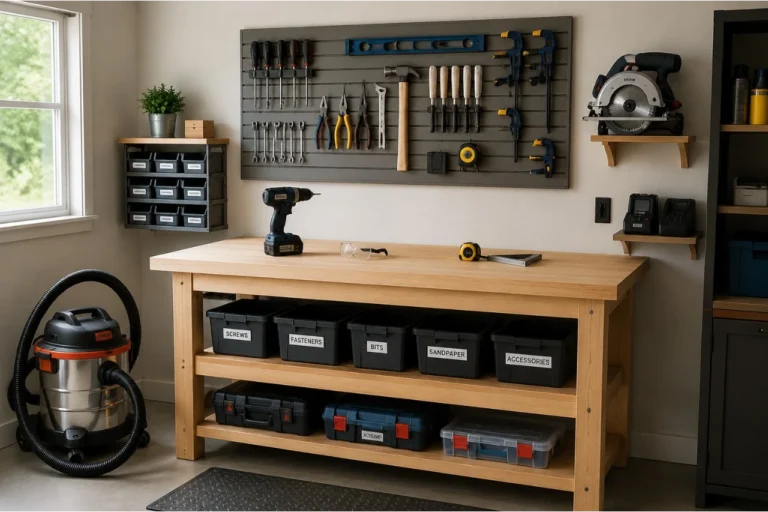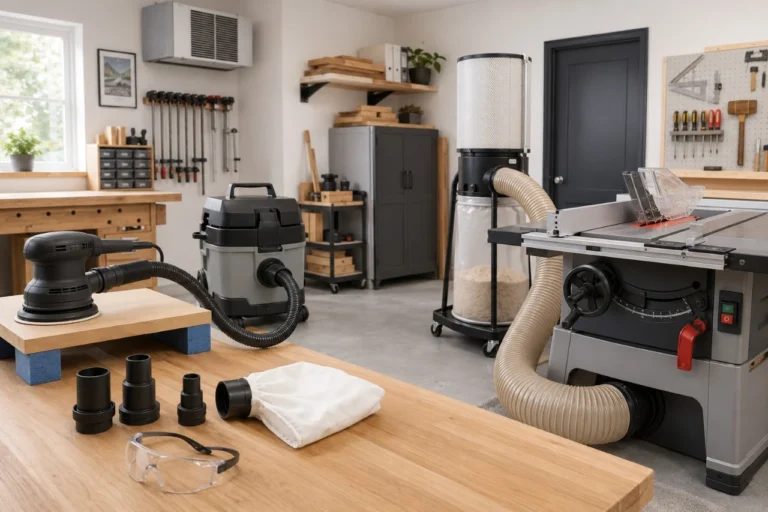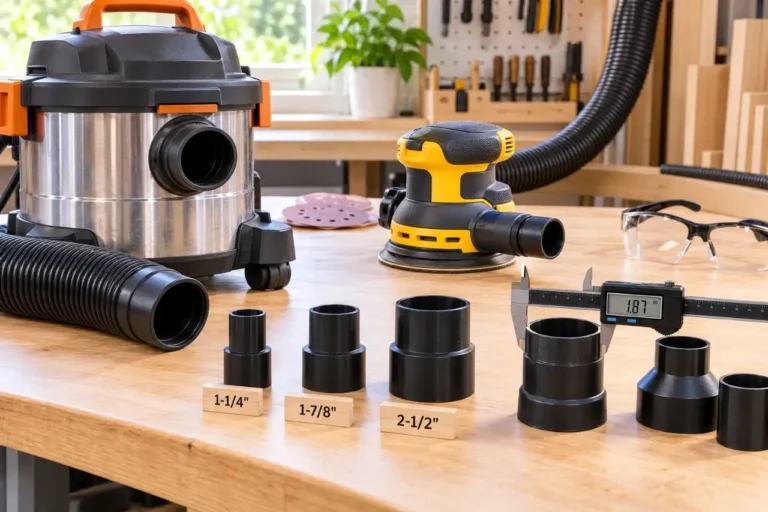

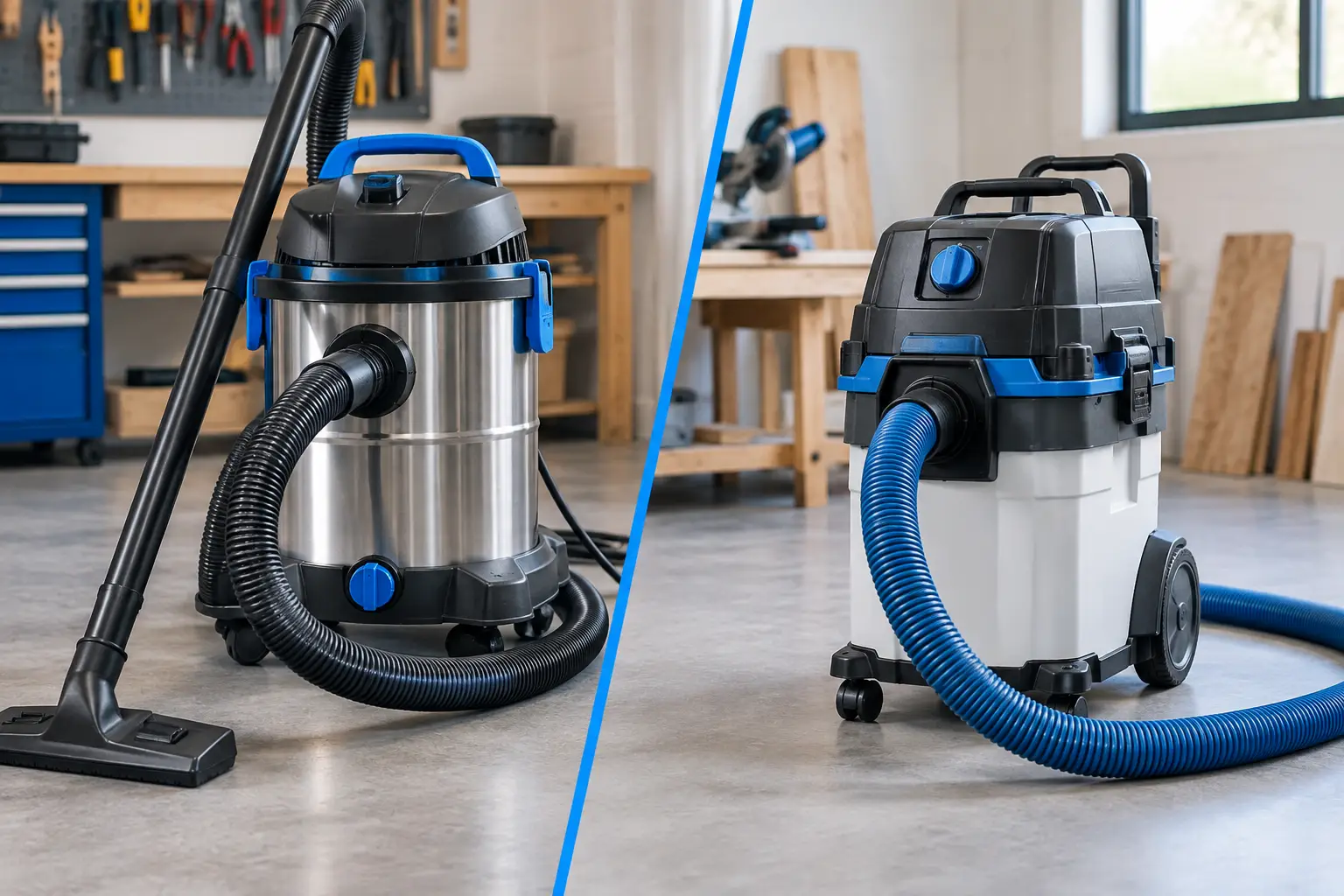
A shop vacuum is usually the better choice for general workshop cleanup and larger debris, while a dust extractor is designed for capturing fine dust directly from a sander, saw, or other dust-producing power tool.
In the shop vacuum vs dust extractor decision, the right answer depends less on motor power and more on what you are collecting, where the dust is created, and how much filtration the job demands.
A shop vacuum can be useful in almost any garage or basement workspace. But if sanding dust is settling across the room or a tool is producing fine material continuously, cleaning after the fact is not the same as collecting it at the source.
What each tool is designed to do
A shop vacuum, often called a wet/dry vacuum, is built for versatile cleanup. It typically handles wood chips, sawdust, dirt, small debris, and, when the manual allows it and the machine is configured correctly, certain wet messes. Its wide hose and larger pickup opening are helpful when the mess is already on the floor, bench, or inside a cabinet.
A dust extractor is designed primarily for dry, fine dust created during tool use. It connects to a tool’s dust port through a hose so it can pull dust away as the tool creates it. Many extractors use collection bags, finer filters, tool-activated outlets, or filter-cleaning features. Those features vary by model, so the manual always controls what your machine can collect and how it should be configured.
The practical distinction is simple: a shop vacuum cleans up a mess well; a dust extractor helps prevent much of that mess from becoming airborne in the first place.
Shop vacuum vs dust extractor at a glance
| Feature | Shop vacuum | Dust extractor |
|---|---|---|
| Main job | General cleanup and debris pickup | Capturing dust at the power tool |
| Typical hose size | Wider, better for chips and debris | Often narrower, sized for tool ports |
| Fine-dust control | Depends heavily on filter and bag setup | Usually designed around fine-dust collection |
| Tool-triggered operation | Sometimes available | Common on many models |
| Wet pickup | Often possible on wet/dry models | Usually dry use only unless specifically approved |
| Best fit | Floors, benches, cars, rough cleanup | Sanding, cutting, drilling, and dust-sensitive work |
Neither category is automatically safer or more effective in every situation. The correct choice depends on the material, tool, collection port design, and the manufacturer’s approved setup. A shop vacuum fitted with the correct bag and fine-dust filter can serve well for occasional tool collection. A dust extractor can handle ordinary dry cleanup, but its smaller hose may be frustrating when you are picking up screws, chunks of plaster, or planer shavings.
Why fine dust changes the answer
Large wood chips are visible and usually fall close to the tool. Fine dust behaves differently. It can remain in the air, drift beyond the work area, settle on nearby surfaces, and escape through a poor hose connection or overloaded filter.
This matters most when sanding wood, joint compound, paint, filler, or coatings. Medium-density fiberboard, commonly called MDF, deserves special attention because machining it creates very fine dust. Cutting, grinding, or drilling concrete, masonry, and some tile products may create respirable crystalline silica dust. Do not assume an ordinary vacuum setup provides adequate control for those materials. Follow the tool and vacuum manufacturers’ instructions, use the required controls for the job, and consider professional help when the work involves substantial masonry cutting or uncertain materials.
A filter labeled HEPA can improve fine-particle filtration, but the label alone does not guarantee that the entire collection setup performs the same way. Hose connections, damaged seals, an incorrectly installed filter, and using a machine without its required bag can all reduce dust control. Use only the filter, bag, and accessory configuration specified by the manufacturer.
When a shop vacuum makes sense
A shop vacuum is a practical choice when cleanup is the main task. It is especially useful after cutting lumber, assembling furniture, sweeping out a vehicle, cleaning a workbench, or collecting larger debris around a project.
It can also work for occasional dust collection from a portable tool if three things are true: the vacuum has an appropriate fine-dust filter or bag, the tool connects securely using manufacturer-approved components, and the amount of dust is modest. For example, drilling a few holes in a wood project or making a few cuts with a saw that has a dust port may be manageable with this setup.
The limitation appears during longer sanding sessions or repeated cutting. Fine dust can quickly coat or clog a standard filter, reducing airflow. As airflow drops, collection at the tool drops too. You may still hear the vacuum running strongly while very little dust is actually being captured.
If your vacuum has a filter-cleaning system, use it only as directed. Do not strike filters against the floor or blow them out with compressed air in the workshop. That simply puts collected dust back into the air.
When a dust extractor is the better fit
Choose a dust extractor when your work repeatedly creates fine dust and your tool has a usable dust port. Random-orbit sanding is the clearest example. An extractor connected to the sander can improve visibility, keep abrasive discs from loading as quickly, and reduce the layer of dust left behind on the project and surrounding workspace.
Dust extractors are also useful for trim routing, track-saw cutting, drilling with a collection attachment, and cleanup connected to a tool that produces dry powdery debris. Tool-triggered operation can be convenient because the extractor starts when the connected tool starts, provided both tools are used within the outlet’s stated electrical limits.
Do not force a hose onto a port that does not fit. A loose connection wastes airflow, while a forced connection can crack a plastic port or interfere with the tool’s intended function. Use only adapters and fittings the tool or extractor manufacturer identifies as compatible.


Set up either system for better collection
Good dust control depends on setup as much as the machine itself. Before starting, use this sequence:
- Match the collection method to the task. Use a shop vacuum for general debris and a dust extractor for sustained fine-dust work. Check whether the material has special hazards before you begin.
- Install the correct filter and bag. A disposable collection bag often keeps fine dust contained during emptying and helps protect the main filter. Do not run a machine without components its manual requires.
- Check the hose path. Keep the hose free of sharp kinks and avoid running it where you could trip over it, pull the tool from the workpiece, or damage the hose with a saw or sander.
- Test suction at the tool. With the system running, check that dust is moving toward the port rather than blowing out around it. If collection is weak, stop and inspect the hose, bag, filter, and connection before continuing.
- Empty the container before it is overfilled. A full bag or bin reduces airflow and can make disposal messier. Shut the machine off before servicing it and follow the manual’s disposal instructions.
Common problems and what they usually mean
If dust is escaping from a sander, begin with the abrasive disc. Sanding discs have holes that need to align with the sander pad’s holes. Misalignment blocks the path that carries dust into the tool. A worn pad, torn backing, or clogged disc can cause similar problems.
If suction suddenly drops, look for a full bag, clogged filter, blocked hose, or closed airflow control. Fine sanding dust may compact inside a hose bend or at the inlet. Unplug the machine before checking for a blockage, and avoid reaching into openings where sharp debris may be present.
If the tool creates a cloud at the cut line, the tool may simply have limited collection by design. Many open-guard saw cuts and some drilling operations cannot capture every particle. Improve collection where you can, then use reasonable work practices such as working in a well-ventilated area and cleaning settled dust with the proper equipment instead of dry sweeping it into the air.
Safety limits that matter
Never use either machine to collect hot ashes, smoking material, flammable liquids, gasoline, solvents, or combustible metal dust unless the manufacturer specifically approves that use. Ordinary shop vacuums and dust extractors are not automatically safe for those materials.
Stop work if you suspect asbestos-containing material, lead-based paint, significant mold contamination, or an unknown powder from an older building material. These situations require material-specific containment and cleanup methods that a standard home workshop vacuum may not provide.
Also protect the machine’s power cord and avoid using damaged hoses, cracked housings, or filters that no longer seal correctly. For wet pickup, use only a vacuum rated for it and follow its required filter and float instructions.
The most useful way to choose is to think about when and where dust is created. If you need to clean chips and debris after a job, reach for the shop vacuum. If you want to keep fine dust from spreading while the tool is running, connect a properly configured dust extractor and let it work at the source.
Ulverion is reader-supported. Your support allows us to research tools, create practical guides, and share reliable DIY advice for homeowners, makers, and workshop enthusiasts.